
Greetings from the 3rd International Summer School on Underground Hydrogen Storage
Authors: Kirsikka Kiviranta and Tiia Kanto, VTT
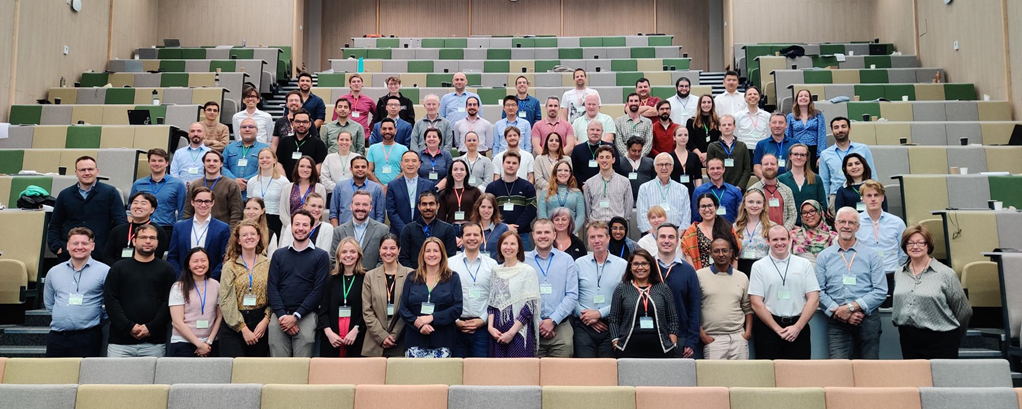
A group of VTT researchers from the HUG consortium had the exciting opportunity to participate in the 3rd International Summer School on Underground Hydrogen Storage, held from July 8th to 12th, 2024, in the historic city of Edinburgh. The summer school, organized by the School of GeoSciences at the University of Edinburgh, brought together a diverse group of participants from around the world. If featured lectures and presentations on underground hydrogen storage (UHS) by leading experts from both industry and academia, interactive panel discussions, and plenty of networking opportunities.
Plenty of room for research in mined solutions
The summer school placed a strong emphasis on UHS in porous rock and salt formations, highlighting the latest developments in these areas. The event featured numerous presentations on cutting-edge research, ranging from geomechanics and geochemistry to microbiology and site screening, as well as the construction and preparation of UHS systems. The expert presentations and strong presence of companies specialising on UHS indicate that these technologies are rapidly advancing, and that continuous progress is being made towards their uptake.
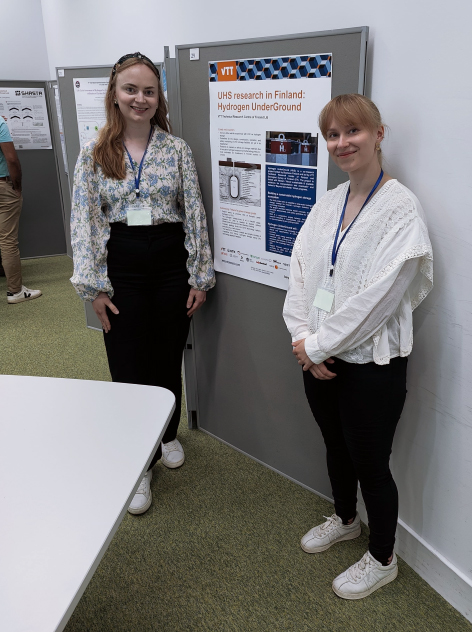
While the UHS discourse is primarily driven by countries with a history in natural gas storage, focusing largely on porous rock and salt caverns, there is considerable space to increase presence in the development of alternative UHS solutions. The summer school’s limited focus on other UHS solutions, such as mined rock cavern technologies, emphasizes the importance of the HUG project. Exploring complementary UHS methods is particularly important for countries like Finland, which lack natural formations suitable for large-scale hydrogen storage. Medium-scale UHS technologies such as the lined rock cavern (LRC) represent a different type of UHS not only due to different storage media, but also due to more frequent cycles. This allows for greater flexibility, accommodating different operational needs. This operational versatility makes LRC not just an alternative to salt and porous rock storages, but a complementary one. This is why the potential of LRC, or similar technologies reaches beyond regions without suitable natural storage sites, contributing to a hydrogen infrastructure that is robust, versatile, and capable of meeting the diverse demands of the global energy transition.
The way forward… putting Finland to the map
Networking sessions revealed a significant gap in awareness regarding Finland’s extensive green hydrogen production potential. Increasing visibility of Finland’s green hydrogen production capabilities is crucial for fostering international collaborations in the hydrogen storage field. Given Finland’s good conditions for green hydrogen production and the current lack of medium to large-scale hydrogen storage options, there is a strategic opportunity to study and showcase mined rock cavern hydrogen storage within the country. This also offers Finland a chance to contribute and take a leading role in developing and advancing alternative UHS storage technologies.
Next year, the summer school will be held in Copenhagen. This will be an excellent opportunity to present the results of the HUG project to international experts and to pave the way for new collaborations and research consortia in the field.